A wedding planner's fee should be compared with the work included. Venue sourcing, design, supplier coordination and on-site event management are different services. A low fee covering one of them cannot fairly be compared with a proposal covering all of them.
This guide explains fee structures and questions to ask. It does not publish a current GWV fee card or claim a universal industry tariff.
Flat fee
A flat fee can be easier to budget when the deliverables are clearly defined. Ask how many functions, planning meetings, venue visits and on-site days it covers, which team members attend, and what happens if the scope grows.
Check travel, accommodation, taxes and third-party costs separately. A flat professional fee does not automatically include the services the planner helps you source.
Percentage fee
A percentage is meaningful only when the calculation base is written down. Ask which categories count, whether the base is before or after taxes, whether paid guest travel or jewellery is included, and how later additions affect the fee.
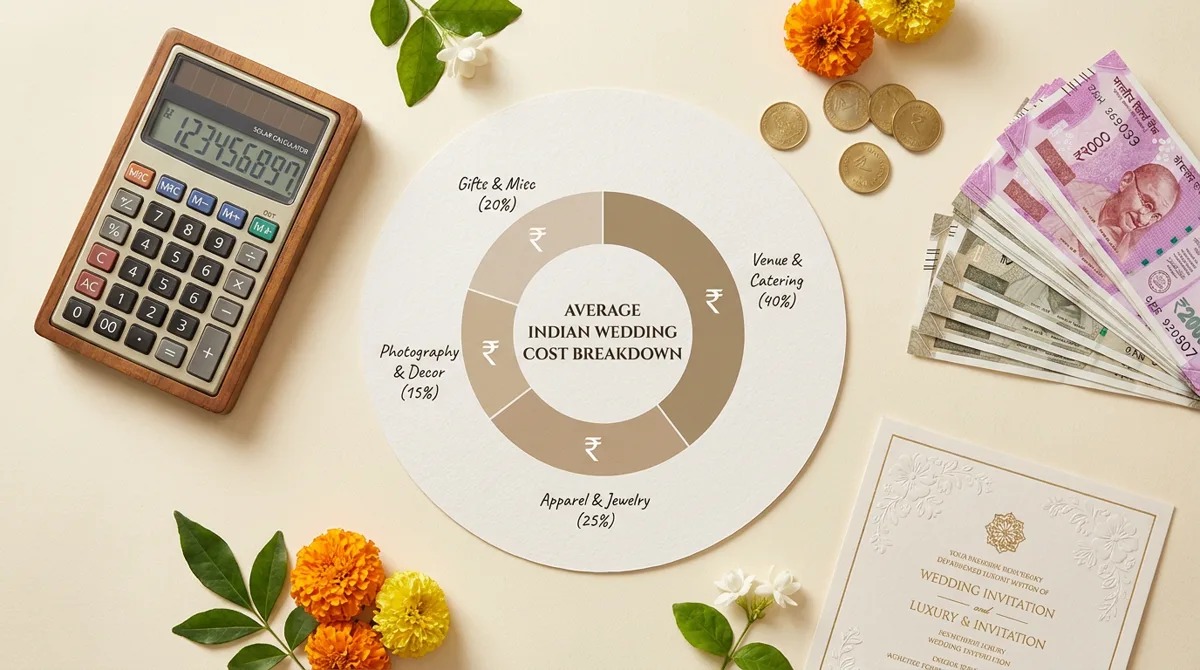
For arithmetic only, 5% of an agreed ₹1 crore fee base is ₹5 lakh. If the agreed base changes to ₹1.20 crore, the same percentage gives ₹6 lakh. This is an example, not a recommended fee or a quotation.
Hybrid or staged fees
A proposal may combine a fixed planning fee with an on-site fee, a sourcing charge or a percentage component. Request a worked calculation for your brief so charges are not accidentally counted twice.
Ask about any hotel or supplier commissions, markups or referral arrangements and how they affect the commercial proposal. Do not assume a service is free or has no markup without written terms.
Define the deliverables
- Venue shortlist, site visits, hotel room block and quotation comparison.
- Design concepts, decor selection and production coordination.
- Supplier sourcing, negotiations and responsibility for contracts.
- Guest communications, rooming lists, arrivals and transfers.
- Function schedules, rehearsals, on-site team and escalation contacts.
- Budget tracking, payment reminders and change approvals.
Mark each item as included, excluded or optional. Identify what remains with the family, hotel or another supplier. Hotel sourcing does not automatically include full wedding planning.
Questions before accepting a proposal
Ask who your main contact is, how often updates are provided, what attendance is included and how changes are authorised. Confirm the payment schedule, cancellation terms, any substitution arrangements and what records you receive after the event.
Request relevant work examples and references where available, and review the permission and context behind images or testimonials. A portfolio image alone does not explain what the provider delivered.
How to compare two planner quotes
Give both providers the same dates, guest count, function schedule, venue status and required responsibilities. Compare team coverage and deliverables alongside the fee. Add travel, accommodation and applicable taxes to the agreed scope before assessing affordability.
For hotel and room requirements, send GWV a venue enquiry. If you also need planning services, describe the responsibilities required and ask for availability, scope and commercial terms in writing. Existing planners can use the planner enquiry page to discuss hotel sourcing and client communication.