For a destination wedding bride, the mehndi ceremony isn't just a ritual — it's a multi-hour photographable centrepiece. The design you choose will appear in close-up portraits, wide-angle ceremony shots, and the candid moments between. It needs to match your overall wedding aesthetic, complement your lehenga colour palette, and be substantial enough to read on camera but not so overwhelming that it competes with your jewellery.
This guide covers three dominant 2026 styles for destination wedding brides, plus the practical questions you must ask before booking a mehndi artist — particularly if you're flying in for a Rajasthan or Goa destination wedding and need someone who has done royal-scale palace weddings before.
The Three Dominant 2026 Bridal Mehndi Styles
1. Royal Rajasthani Full-Arm (Most Popular for Palace Weddings)
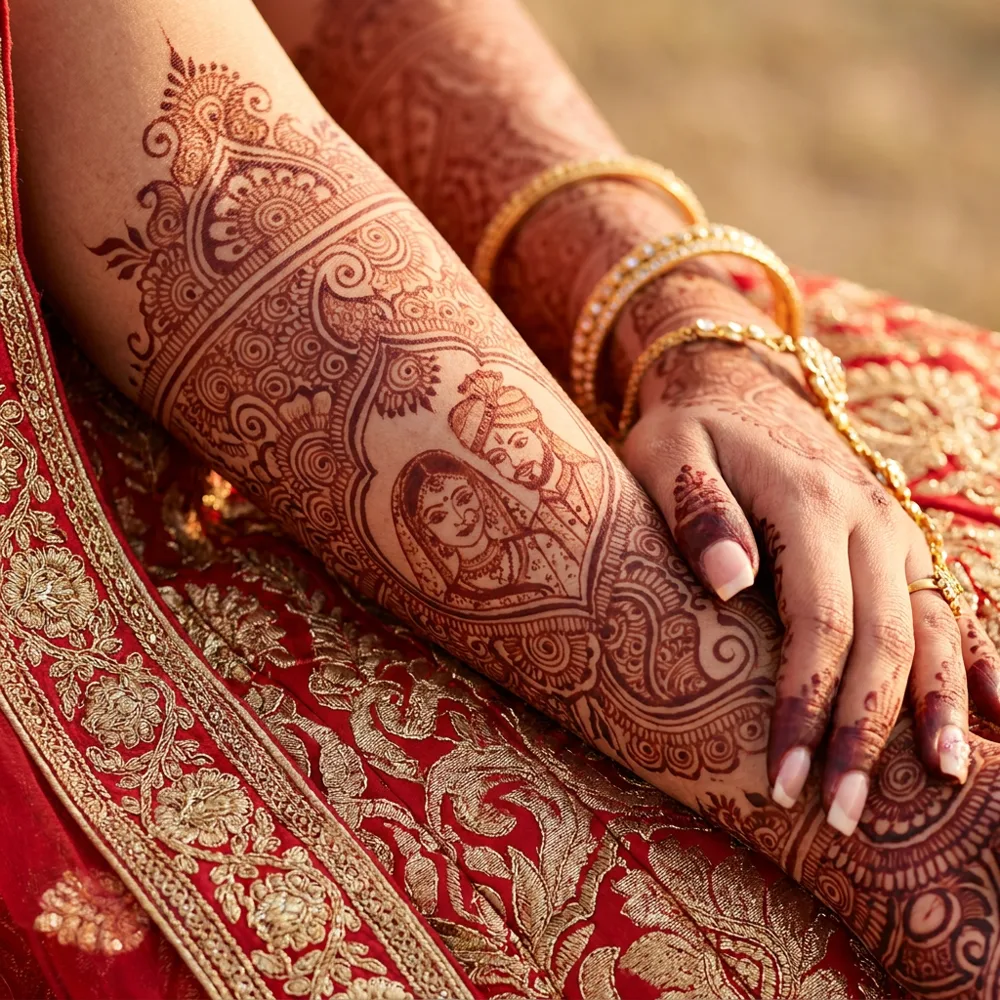
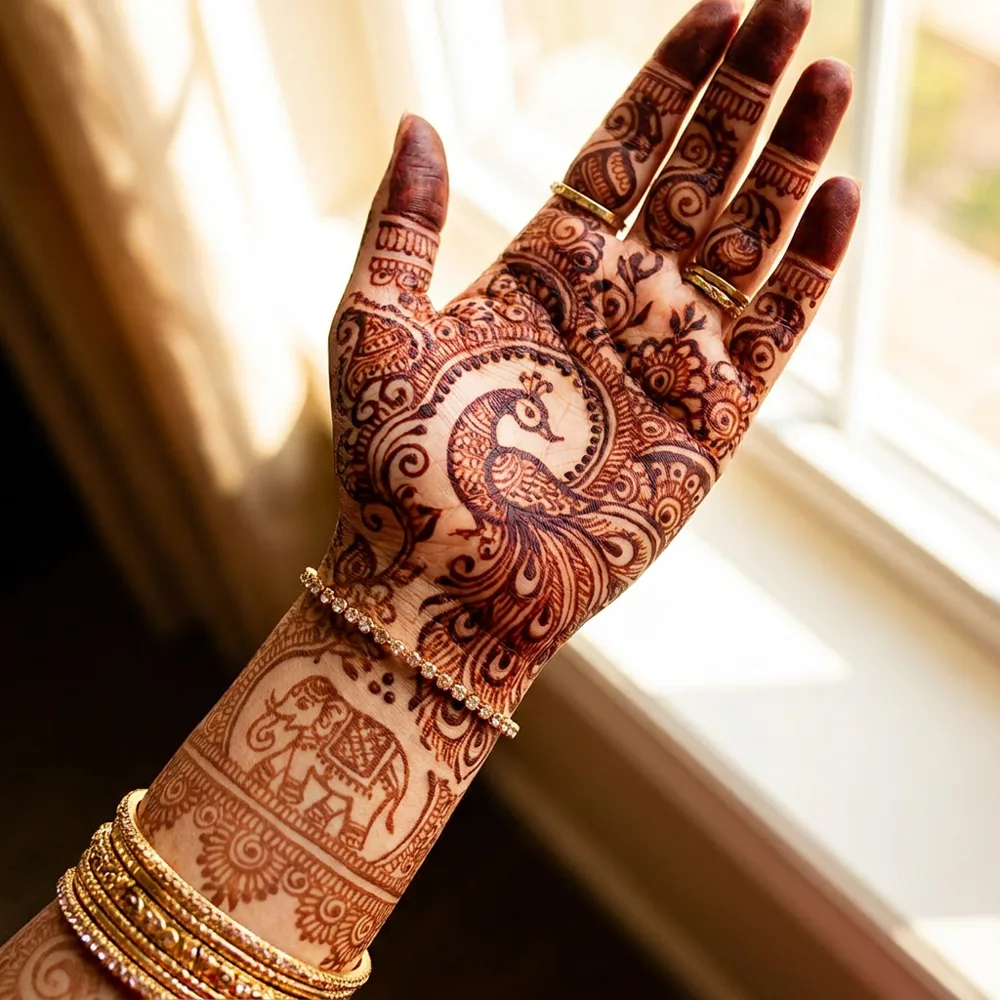
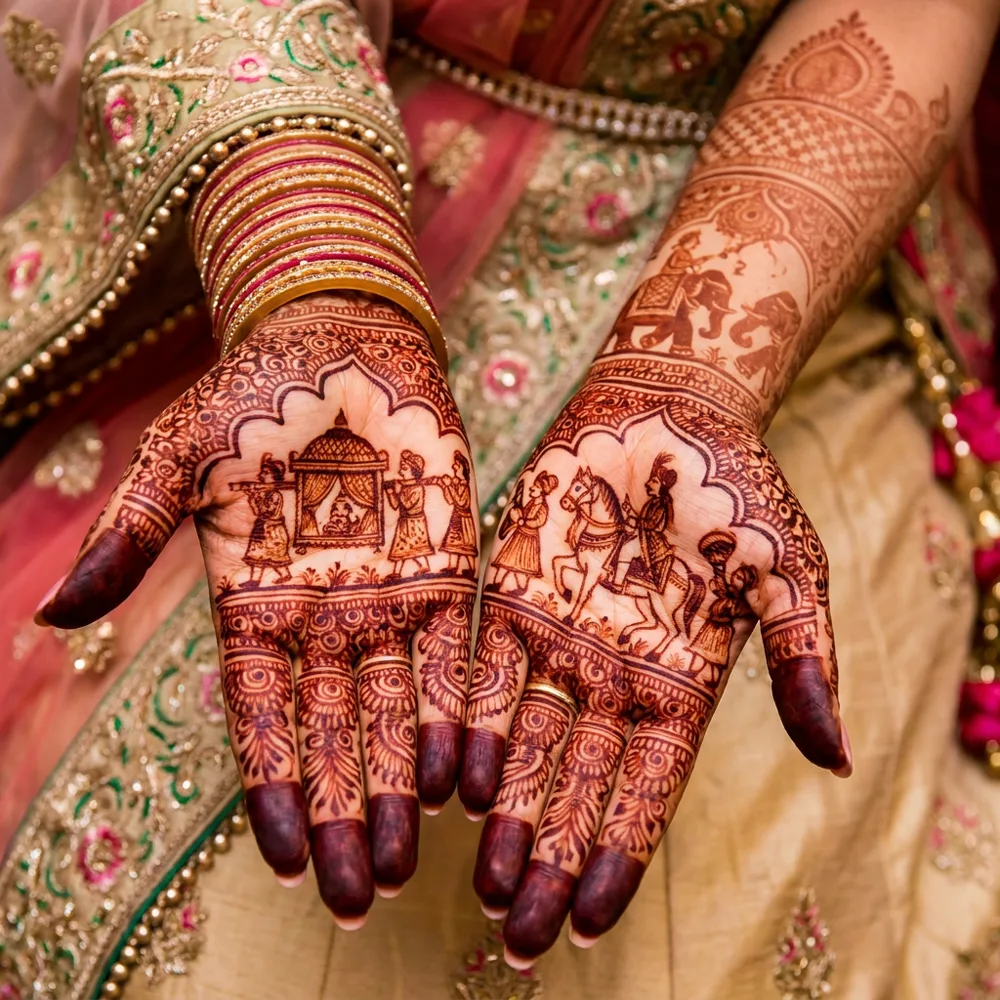
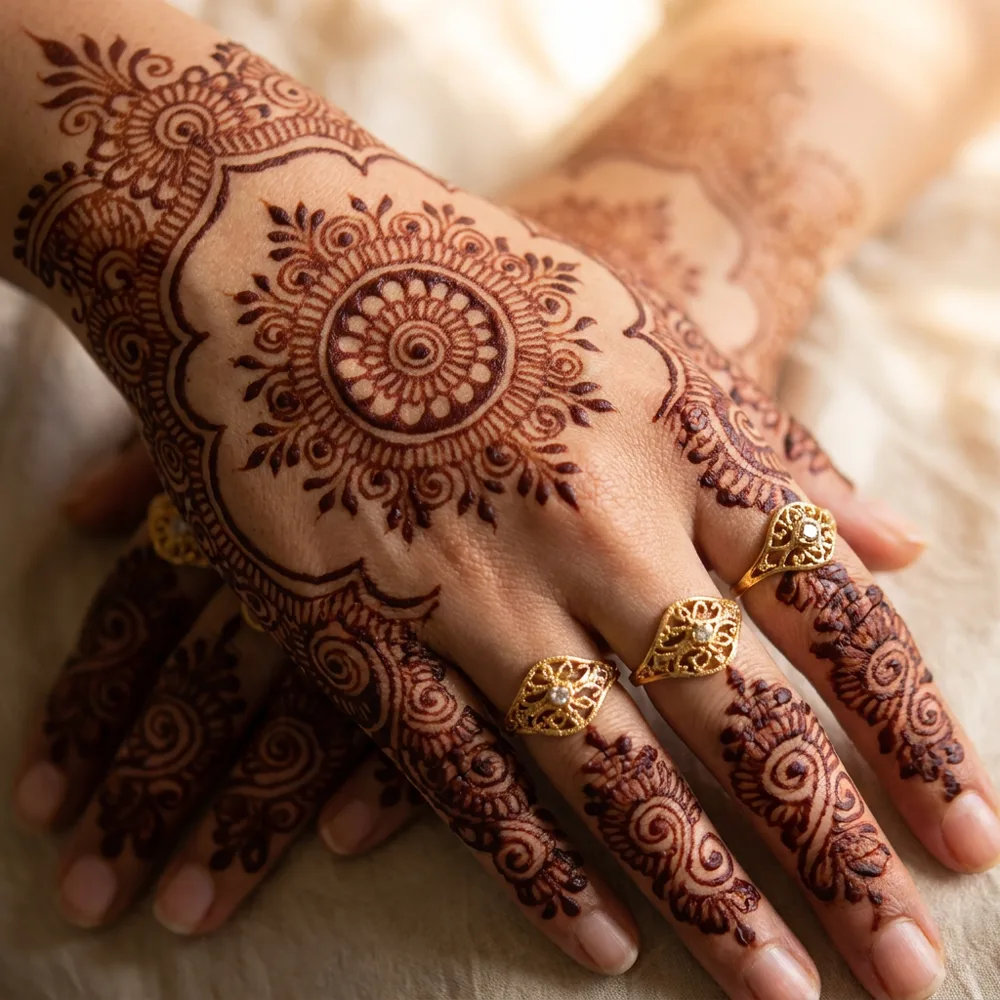
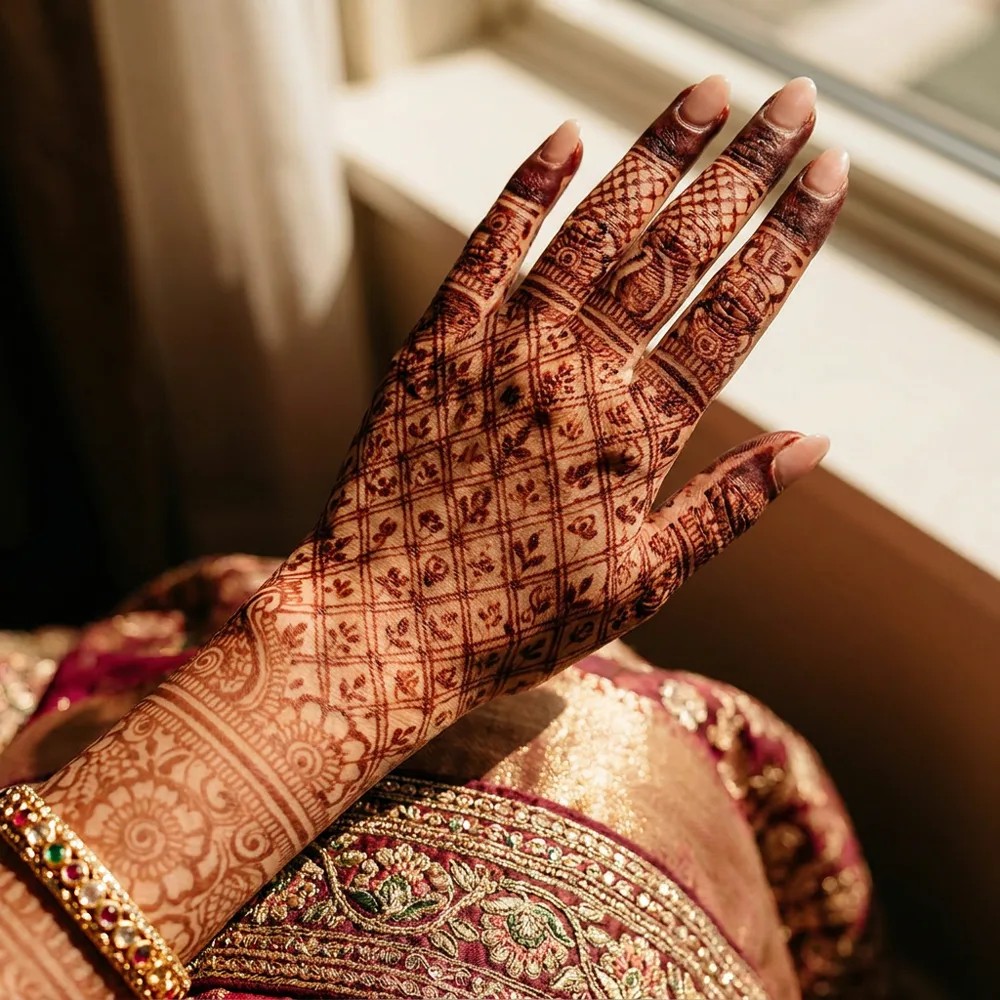
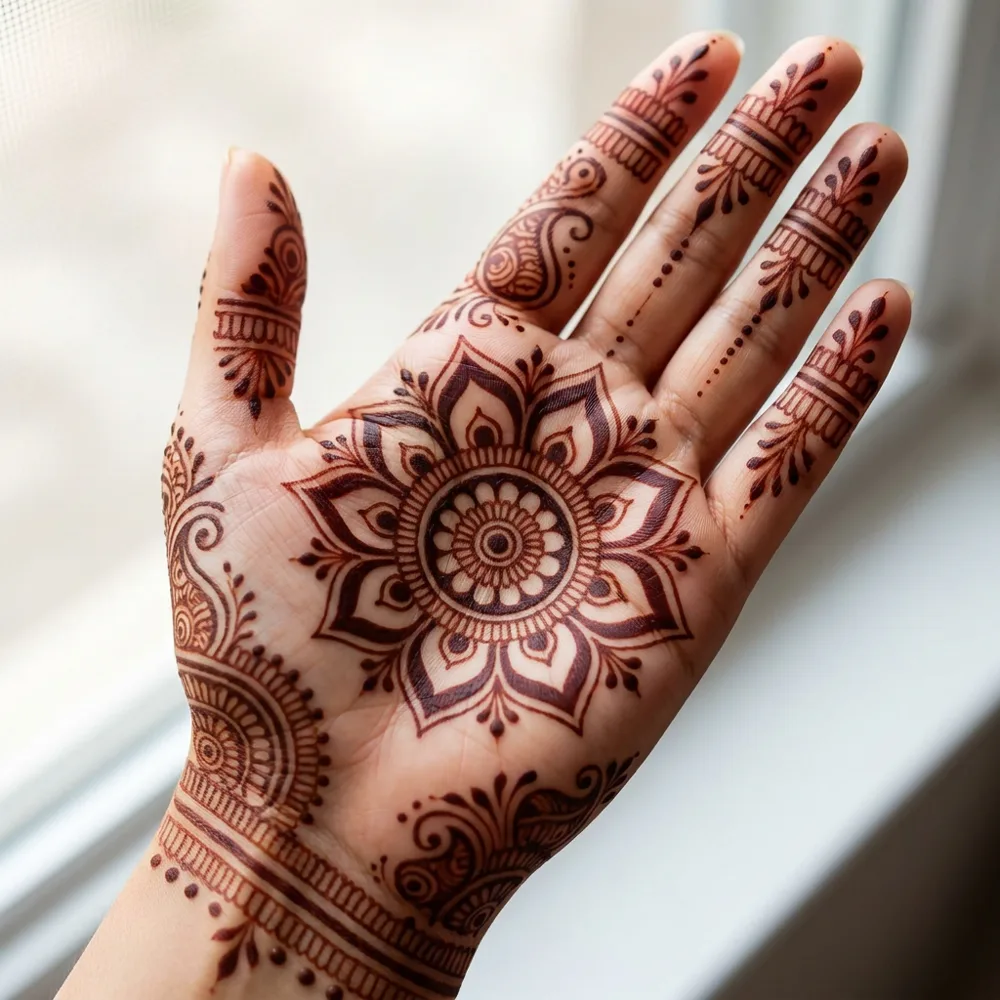
The royal Rajasthani style is the default choice for destination weddings at Udaipur, Jaipur, Jodhpur, and Jaisalmer palace venues. Coverage runs from fingertips all the way up to the elbow (often above), with the bride's portrait, the groom's name (initials or full), wedding date, and traditional motifs (peacocks, elephants, doli, baraat scenes) woven into the dense pattern.
What makes the royal style work for palace venues: the dense detail matches the architectural richness of palace settings. A minimal mehndi looks lost against a backdrop of Mughal arches and chandeliers — but a full-coverage royal design holds its own.
Time required: 5-7 hours for full arm-and-leg coverage. Cost (named bridal artist): ₹40,000-1.5 lakh for the bride alone. Recommended start time: 6 AM for an evening sangeet — gives 8-10 hours for the colour to develop properly.
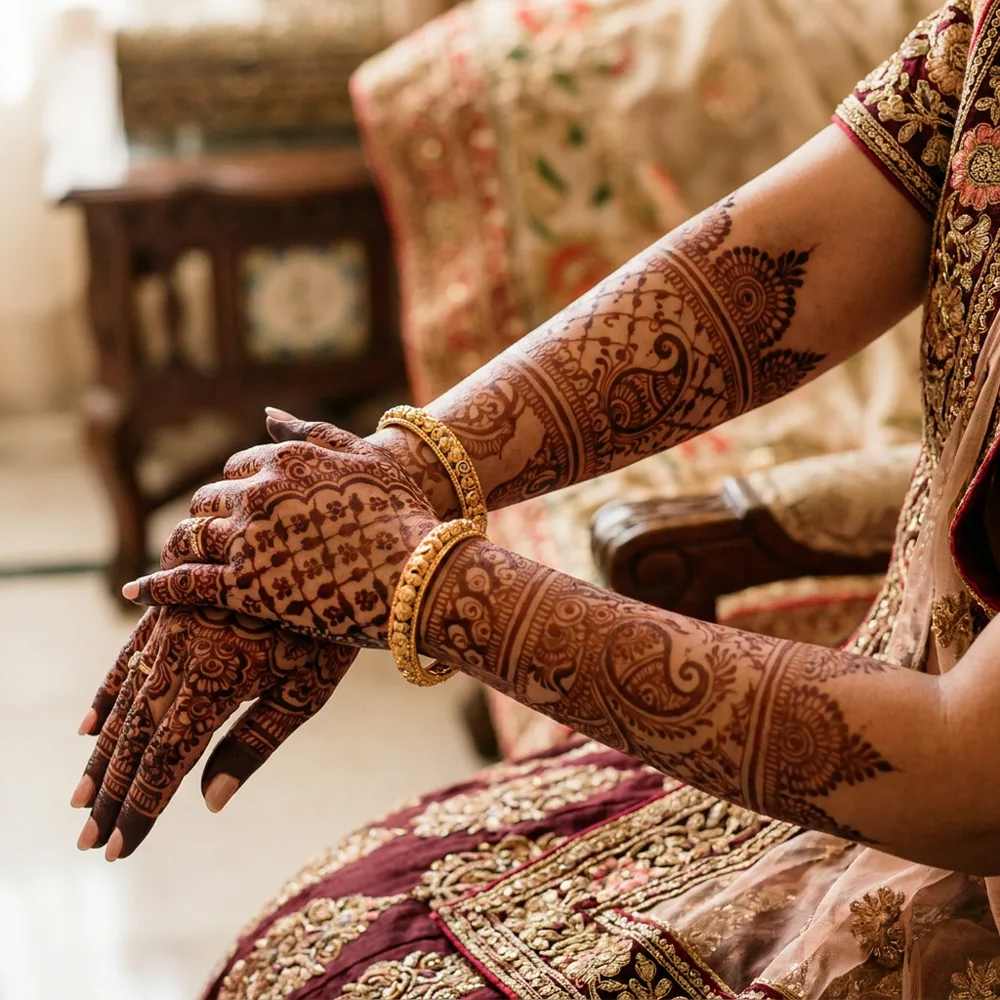
Royal Rajasthani Designs
Full-coverage detailing typical for palace and heritage venue weddings. 5-7 hour application time.
2. Modern Arabic-Style
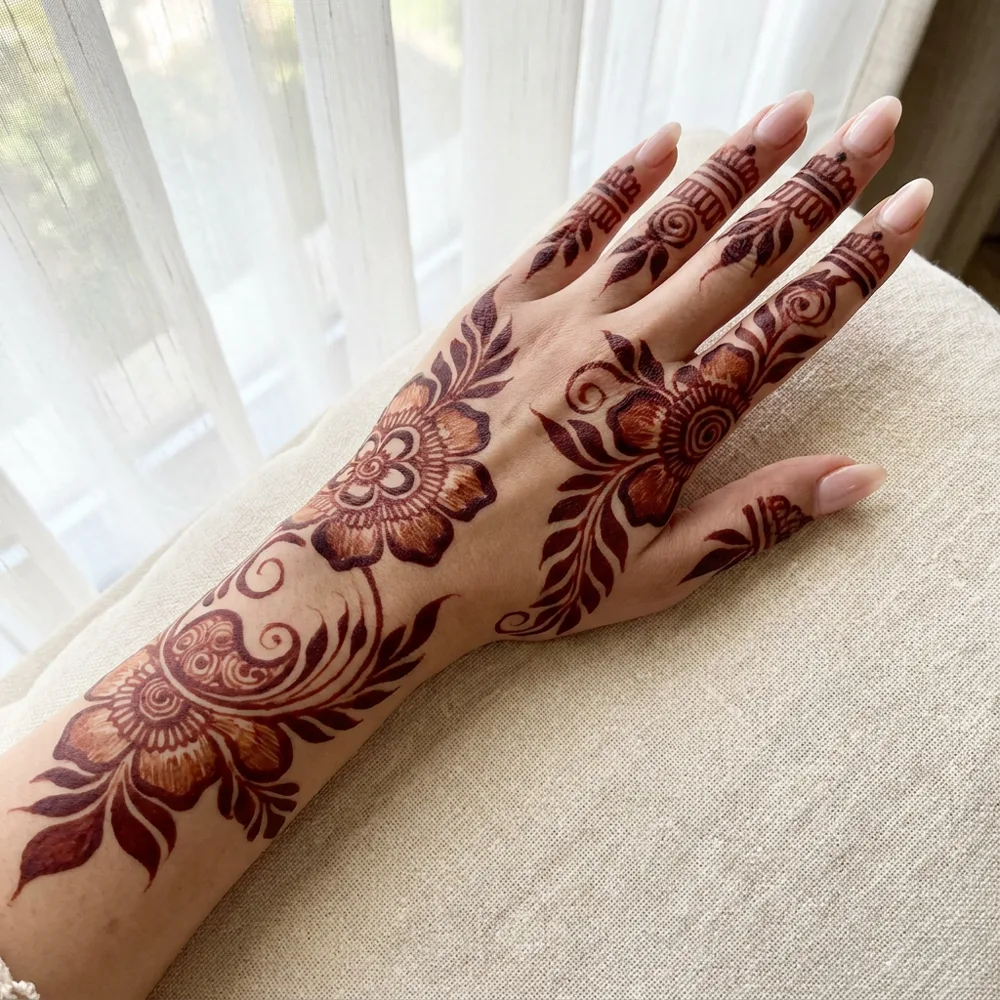
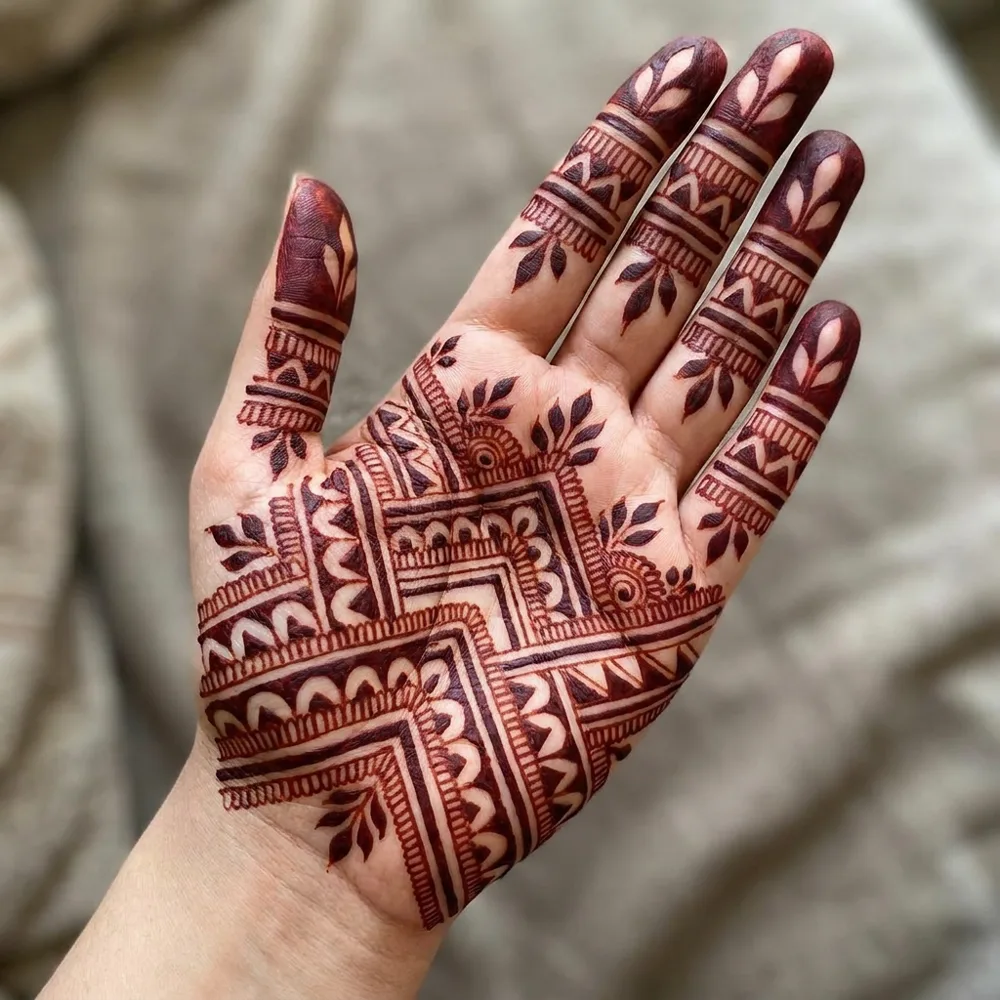
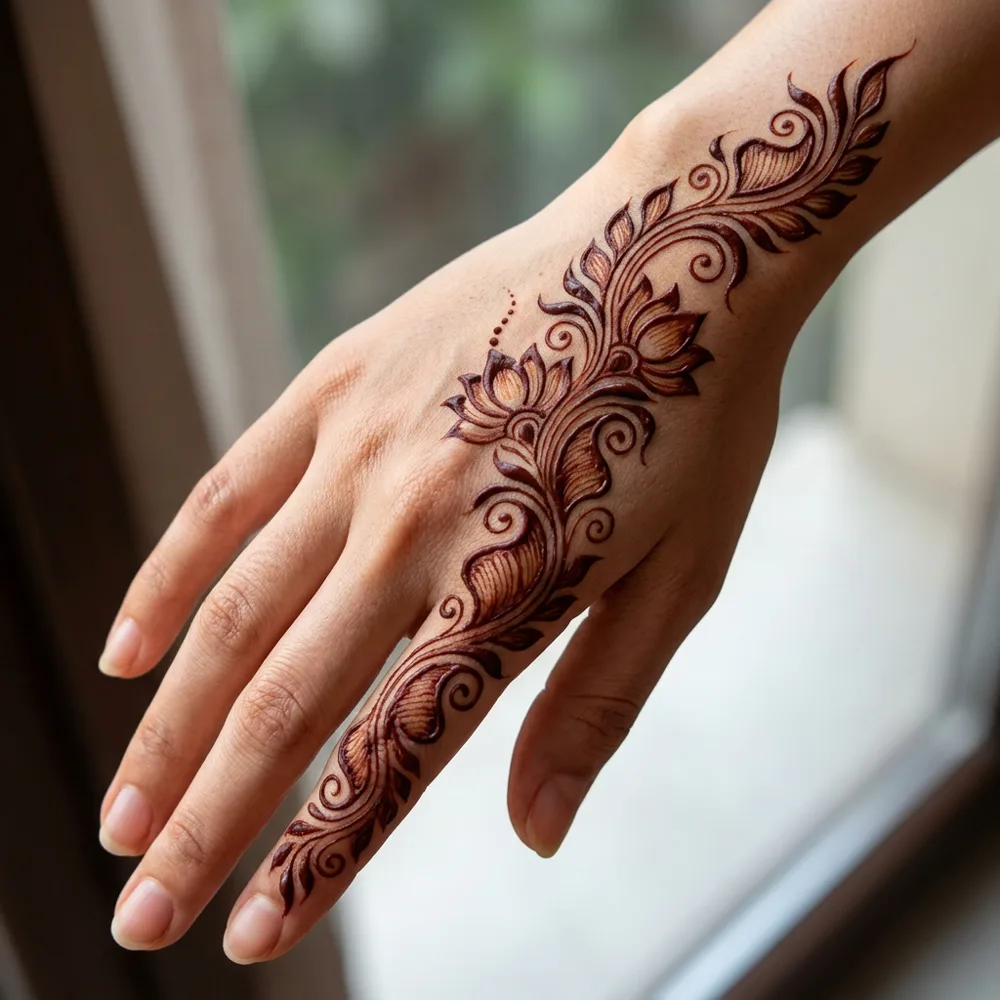
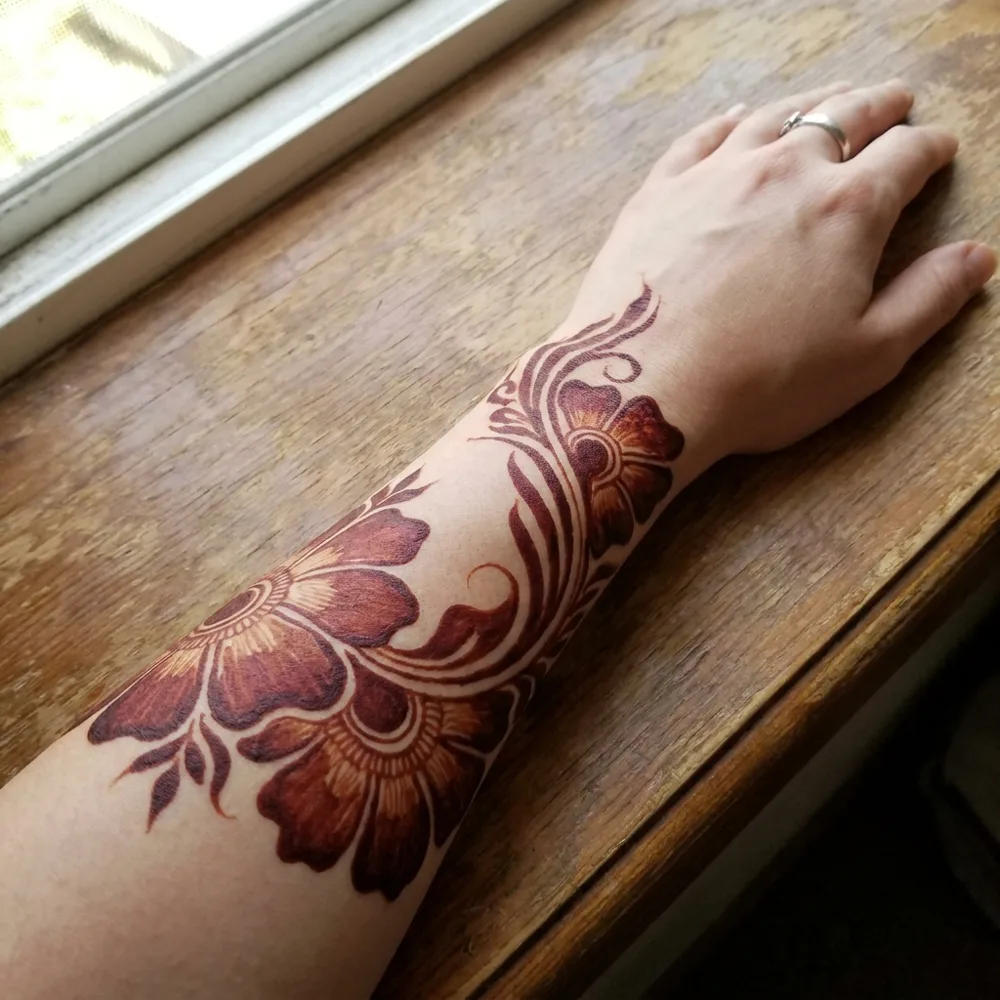
Arabic mehndi has become the second-most-popular bridal style in the last 3 years. Distinguished by bold geometric patterns, larger negative-space gaps, and a less-is-more approach compared to Rajasthani. Florals dominate, often in big bold strokes rather than fine detail.
Arabic style works particularly well for: beach weddings in Goa (matches the cleaner aesthetic), Middle East venues (Bahrain, Qatar), modern luxury hotels rather than heritage palaces, and brides choosing pastel or non-traditional colour lehengas.
Time required: 3-4 hours. Cost: ₹15,000-50,000 for the bride. Faster, more affordable, photographs beautifully in natural light.
Modern Arabic Style
Bold geometric patterns with negative space. 3-4 hour application time. Photographs beautifully in natural light.
3. Minimalist Indo-Western
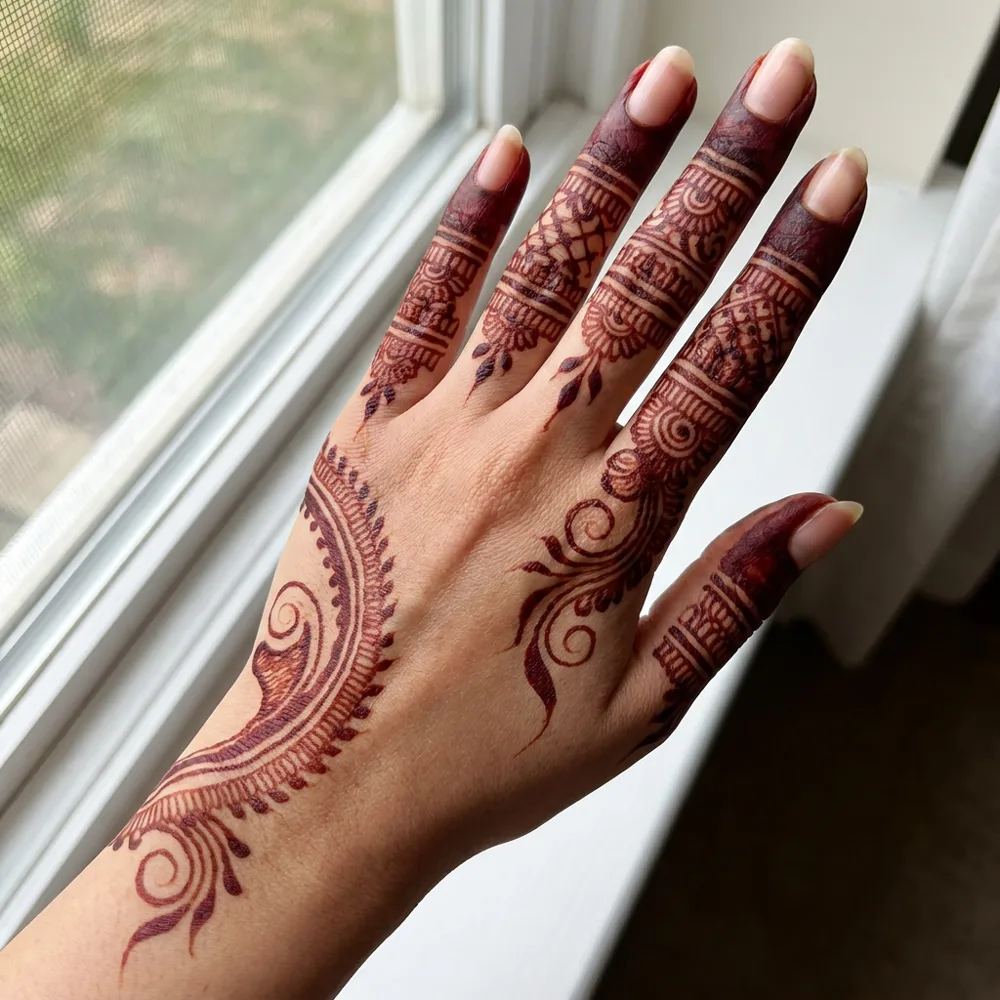
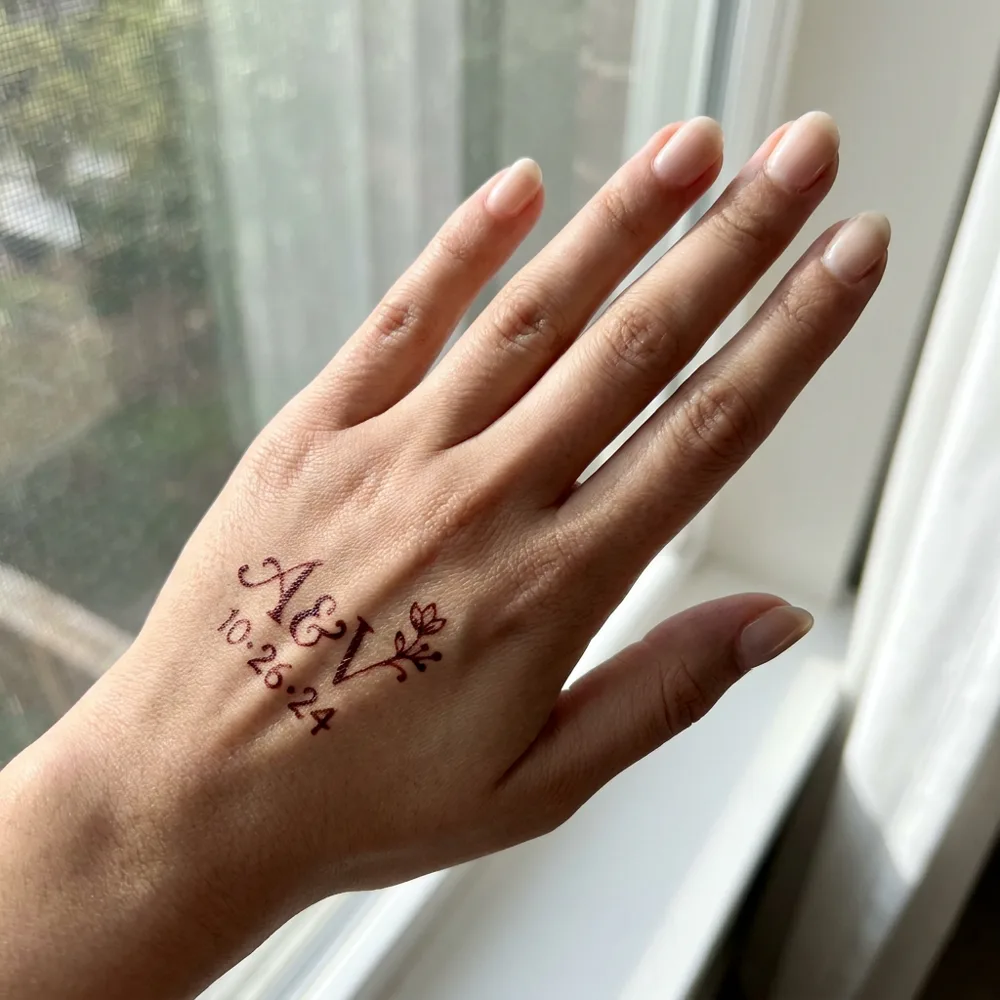
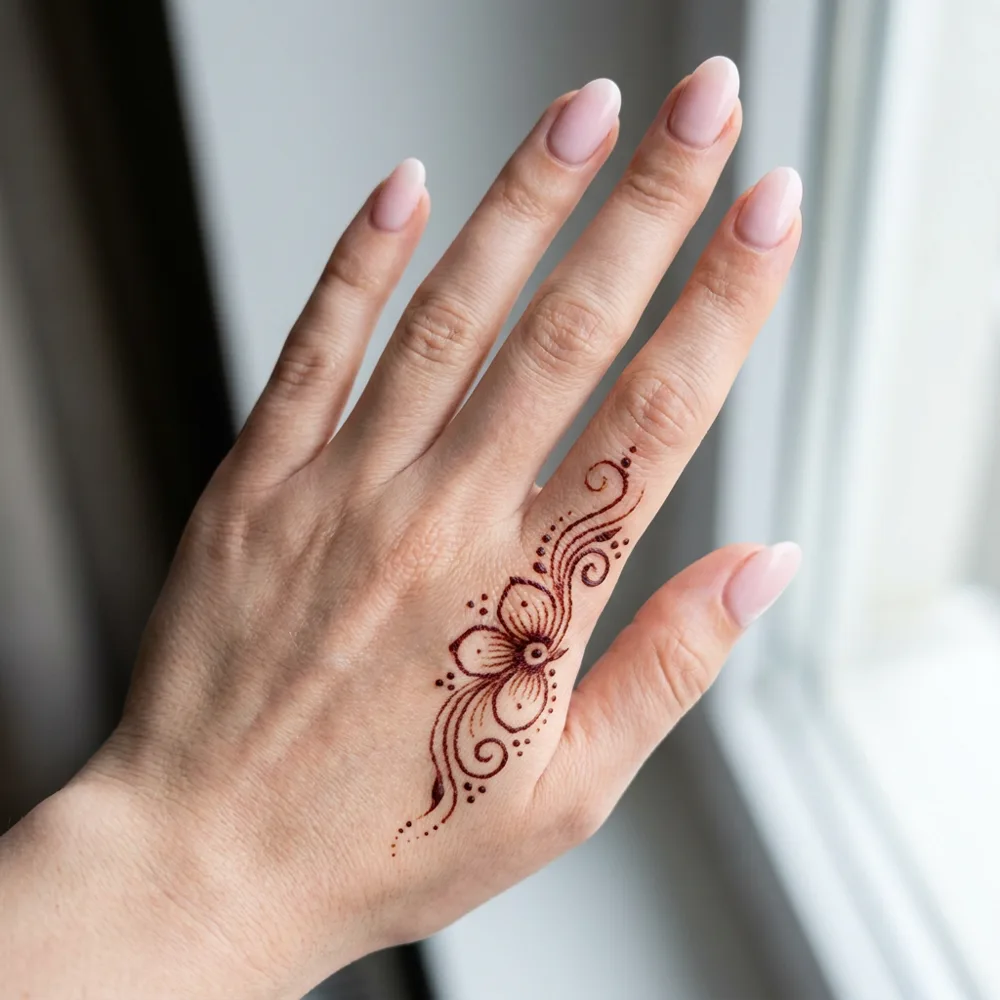
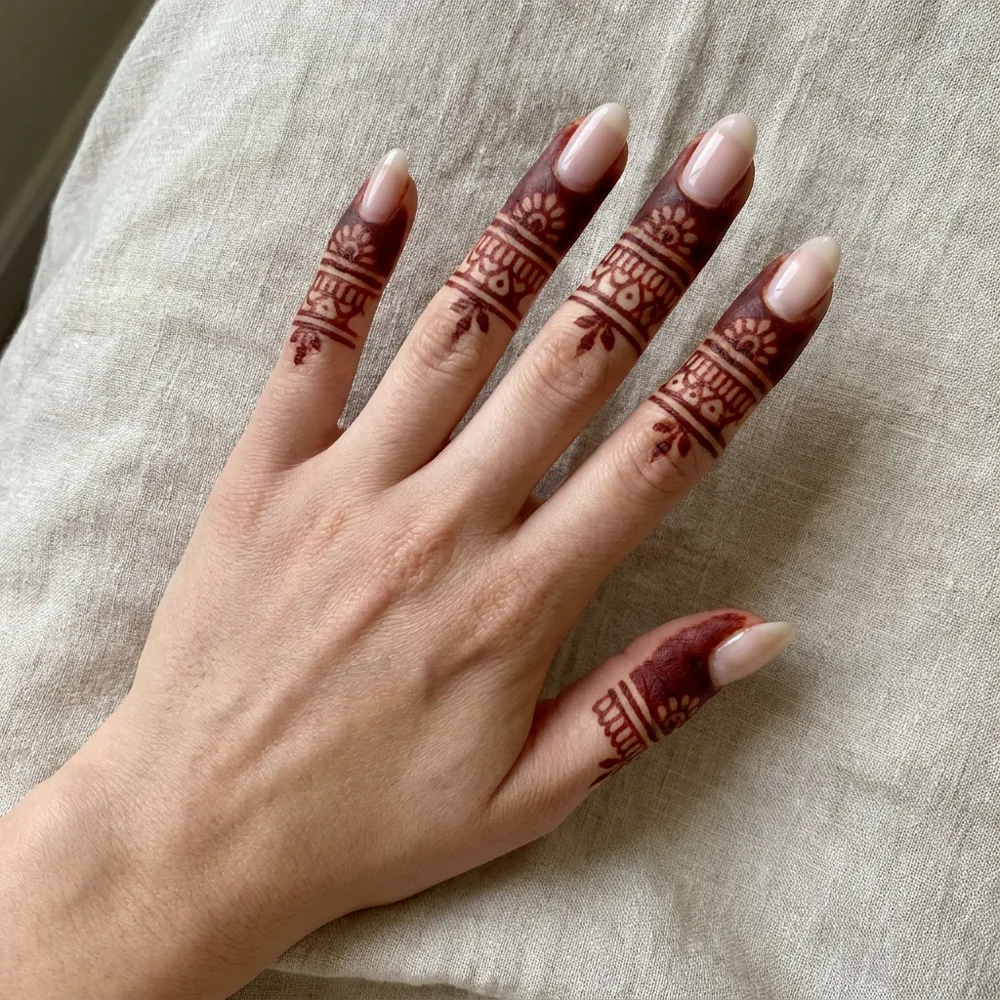
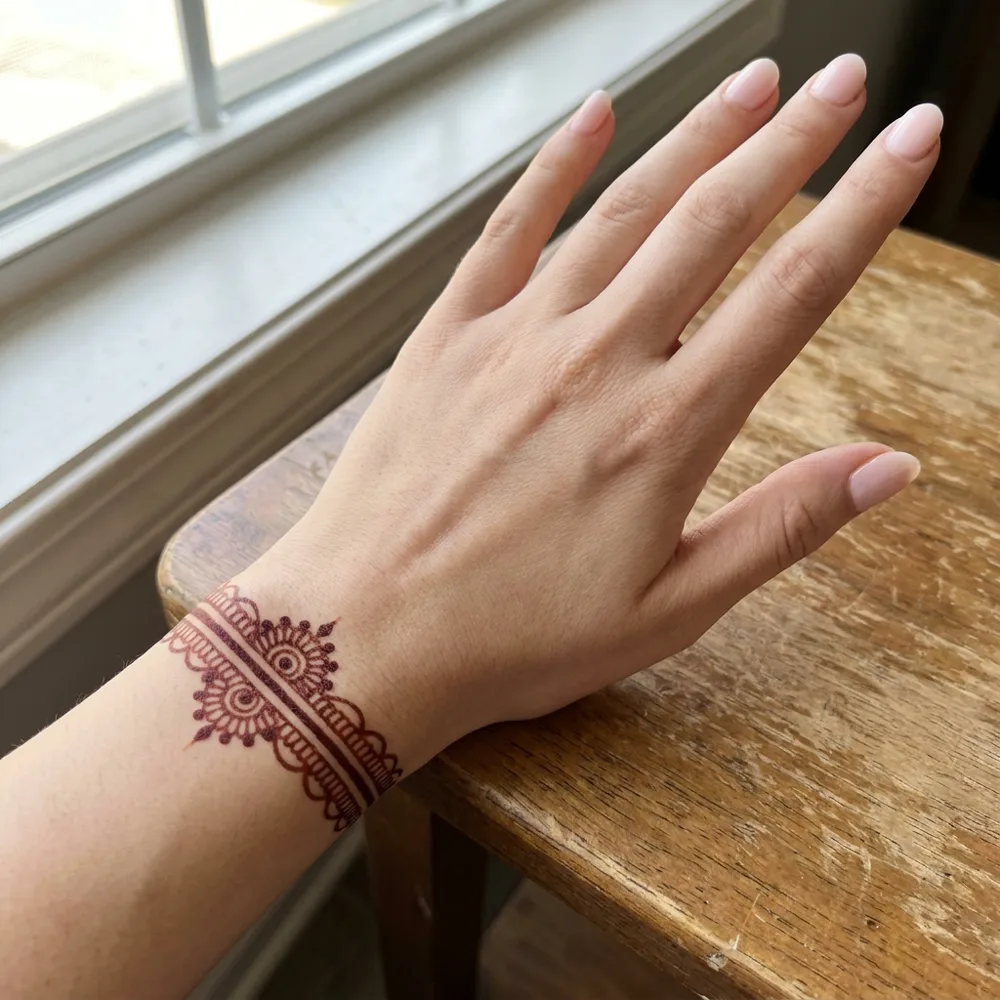
The fastest-growing bridal mehndi style of 2026. Fingertip-only coverage, sometimes just a single floral motif on each palm, or a small "couple's initials" design with date. Designed to look elegant in close-up but not steal attention from the bride's jewellery and outfit.
Particularly popular among NRI brides, second-marriage brides, brides choosing fusion ceremonies, and brides who simply find heavy mehndi overwhelming. Photographs beautifully in candid shots.
Time required: 1-2 hours. Cost: ₹5,000-25,000.
Minimalist Indo-Western
Fingertip-only or single-motif designs. 1-2 hours. Most popular among NRI brides and fusion weddings.
Matching Mehndi to Venue Aesthetic
A common mistake destination brides make: choosing a mehndi style they love in isolation, without considering how it will read against their venue. Some guidelines:
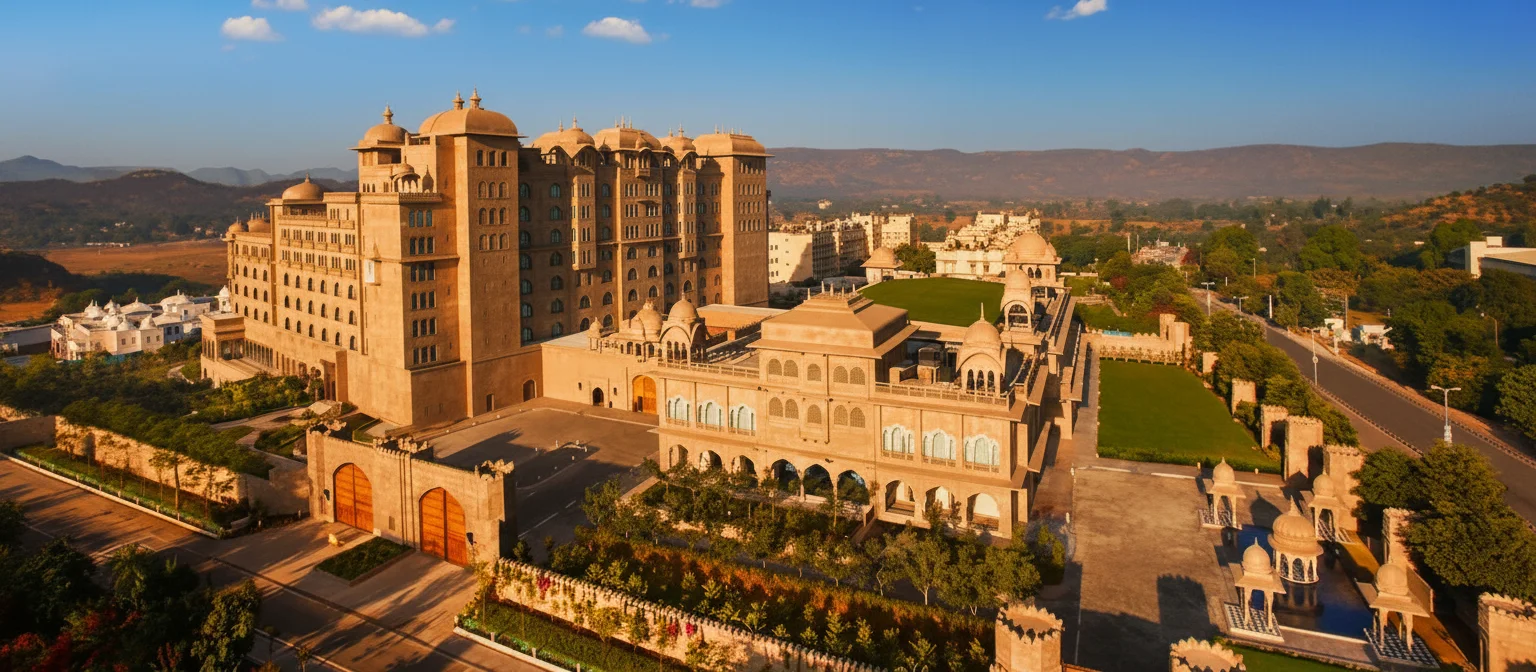
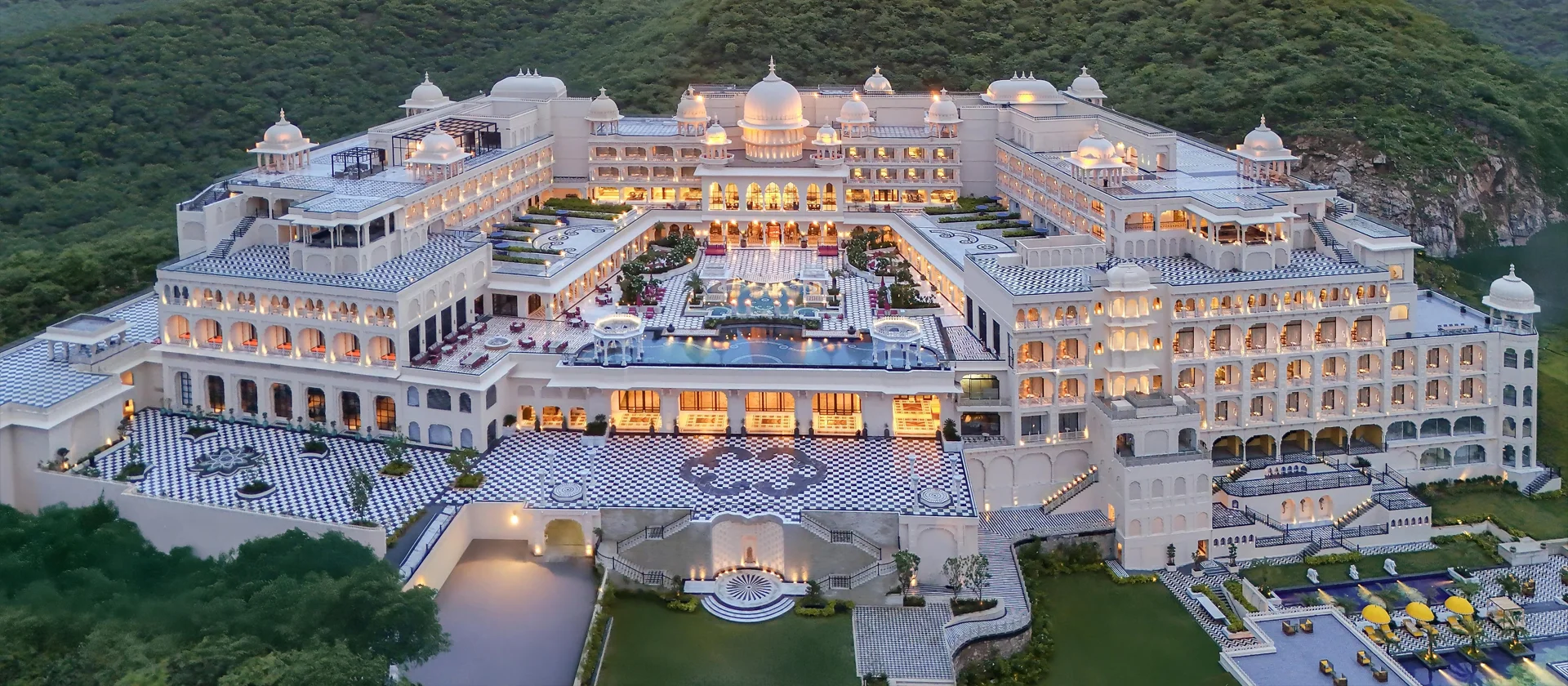
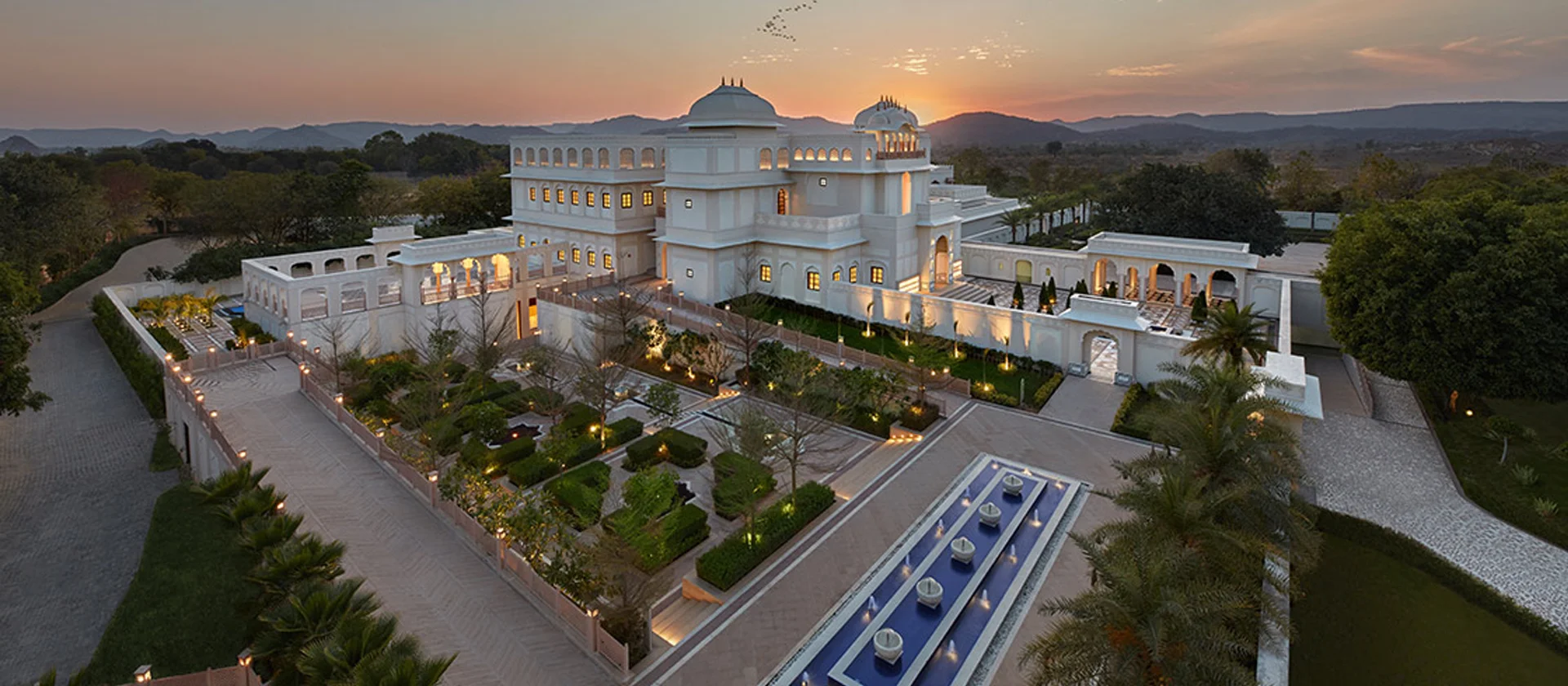
- Heritage palace venue (Taj Lake Palace, Fairmont Jaipur, Umaid Bhawan): Royal Rajasthani full-coverage. The setting demands density.
- 5-star resort or hotel (The Leela, ITC, Hyatt): Either royal or modern Arabic — both work depending on your overall styling.
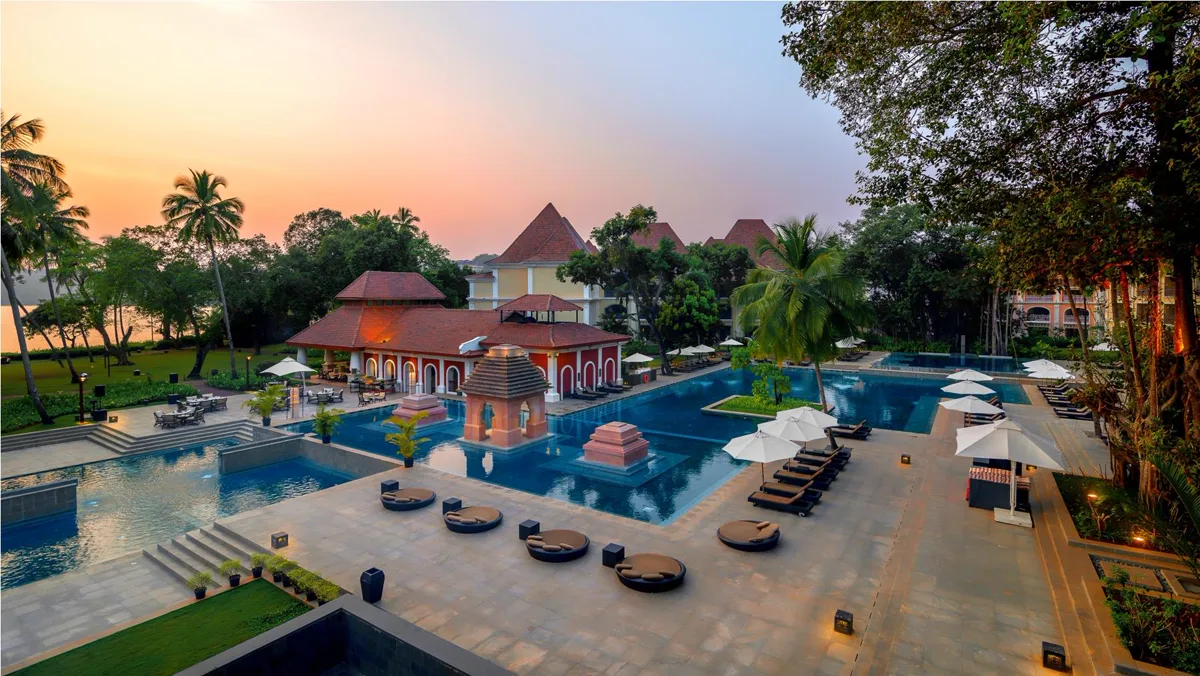
- Beach venue (Goa, Maldives): Arabic or minimalist. Heavy royal mehndi competes with the natural beach aesthetic.
- Fort venue (Suryagarh, Alila Fort Bishangarh): Royal Rajasthani style — the dramatic fort architecture deserves matching ornamentation.
- Modern Middle East venue (Bahrain, Qatar): Modern Arabic style — culturally appropriate and matches the contemporary luxury aesthetic.
Booking the Right Mehndi Artist
For a destination wedding, you can either fly in your preferred home-city artist or hire a local Rajasthan-based artist. Both have trade-offs.
Option 1: Fly In Your Home Artist
Pros: They know your skin, your preferences, your dosing. Continuity from previous mehndi events (engagement, family gatherings).
Cons: Travel + accommodation cost (₹15-40k extra). Limited assistant team — they bring 1-2 people, which slows down family mehndi.
Best for: Brides with strong artist loyalty, or weddings where the bride wants a very specific signature style only one artist can execute.
Option 2: Hire a Local Rajasthan Artist
Pros: They have venue familiarity (knows the lighting, the time pressure, the venue's setup constraints). Larger assistant teams (8-15 artists for family mehndi). Cost-efficient.
Cons: You're trusting someone you may have only met via video call. Limited time for skin compatibility tests.
Best for: Most destination weddings — local artists with 50+ palace-wedding experience deliver consistent quality and handle the logistics better.
What to Ask Before Booking Any Mehndi Artist
- How many bridal mehndis at destination palace venues have you done in the last 12 months?
- What is the cone composition — natural henna only, or with chemical additives? (For pregnancy-safe or allergy-prone brides, this matters.)
- How many assistants will you bring? (Critical for family mehndi — bride needs 1-2 senior, family needs 6-10 juniors.)
- What is the trial session policy? (Most premium artists do 1 free trial — make sure this is included.)
- What is the cancellation policy and refund schedule?
- Can you share recent portfolio of similar venue/style brides?
Practical Timing for Destination Wedding Mehndi
Most destination weddings have a dedicated mehndi day or morning session. Plan it 24-36 hours before the wedding ceremony, never less than 12 hours before.
Optimal schedule: Mehndi function on Day 2 of a 3-day wedding (Day 1 = welcome, Day 3 = pheras/reception). Bride's detailed mehndi starts at 6-7 AM. Family mehndi for guests runs through the afternoon. By evening, the bride's colour has begun to develop.
For Goa beach weddings, do mehndi indoor (most resorts have a dedicated mehndi setup area) — sun and heat affect colour development negatively.
Common Questions
How long does bridal mehndi last? Properly applied royal-style mehndi lasts 14-21 days at peak darkness, then gradually fades. Arabic and minimalist styles fade faster (10-14 days) due to less coverage.
Does mehndi colour depend on the artist? Yes, but only partly. 60% depends on cone quality and freshness, 30% on bride's skin temperature and PH, and only 10% on the artist's skill. The best artists use freshly-rolled cones (within 48 hours) for maximum colour.
Should I do mehndi before reaching the venue? Not recommended. Mehndi smudges easily during travel. Always plan it after you arrive at the destination.
What about mehndi for groom and family? Most modern destination weddings include groom mehndi (single motif, small) and family mehndi (everyone gets a quick design). Budget ₹500-2,000 per family member for assistant-level work.
The Bottom Line
Match your mehndi style to your venue, your dress, and your overall wedding aesthetic — not to a Pinterest board taken in isolation. For most destination palace weddings, royal Rajasthani full-arm coverage delivers the photogenic richness the setting deserves. For beach and modern luxury venues, Arabic or minimalist styles often photograph better.
Book your artist 6 months before the wedding date for premium choices (top artists like Veena Nagda and Vinod Bharadwaj book out 9-12 months in advance for peak season).
For more on planning your destination wedding, browse our destination guides, planner service tiers, or download our free 52-page Cost Guide with full vendor pricing benchmarks including mehndi artists.
Plan Your Destination Wedding
Match your mehndi to your venue: browse Udaipur and Jaipur palace wedding venues with real costs, or get the best hotel rate from our team.